2.1 基于随机森林的压裂效果主控因素分析
为明确各储层参数、工程参数对产能的非线性影响程度,本研究采用随机森林方法确定产能的主控因素.随机森林是一种集成机器学习方法,在决策树的训练过程中进一步引入随机属性选择而形成的.相比决策树,该方法泛化性更好,并能够得到各变量的相对重要度.随机森林建模时随机采样未被抽到的数据称为袋外数据集,这些数据没有参与训练集模型的拟合,可以用来检验模型的泛化能力[15-16].在对模型进行重要性排序时,使用相应的袋外数据计算它的袋外误差 r1. 然后袋外数据中的某个特征顺序被随机变换,再次计算袋外误差 r2. 假设随机森林有N棵树,则某个特征的重要性I为

根据上述原理,建模计算得到玛湖地区水平井各项特征因素对产能的重要性评分,各项特征参数重要性总评分为1.0[17].储层参数总评分为0.550,2级储层主控参数依次为含油饱和度、孔隙度、钻遇率和地层压力,评分分别为0.175、0.152、0.051和0.046; 工程参数的重要性总评分为0.45,2级施工主控参数裂缝间距、总液量、总砂量、施工排量和平均砂比分别为0.152、0.112、0.094、0.042和0.031.由此可见,玛湖地区水平井的产能受储层参数影响较大,但在进行压裂施工参数优化时,应重点考虑裂缝间距、总液量和总砂量等工程参数,以获取最大产能.
2.2 产能预测模型工作流程
逆传播(back propagation, BP)神经网络是一种按误差逆传播算法训练的多层前馈网络,根据输入的训练样本,可自动适应和确定各神经元的连接权重[18].BP神经网络基本思想是梯度下降法,利用梯度搜索技术,使网络的实际输出值和期望输出值的误差均方差为最小[19-20],是目前应用最广泛的神经网络模型之一.遗传算法(genetic algorithms, GA)通过学习模拟生物进化论和自然界遗传机制,形成一种并行随机搜索最优化方法[21].
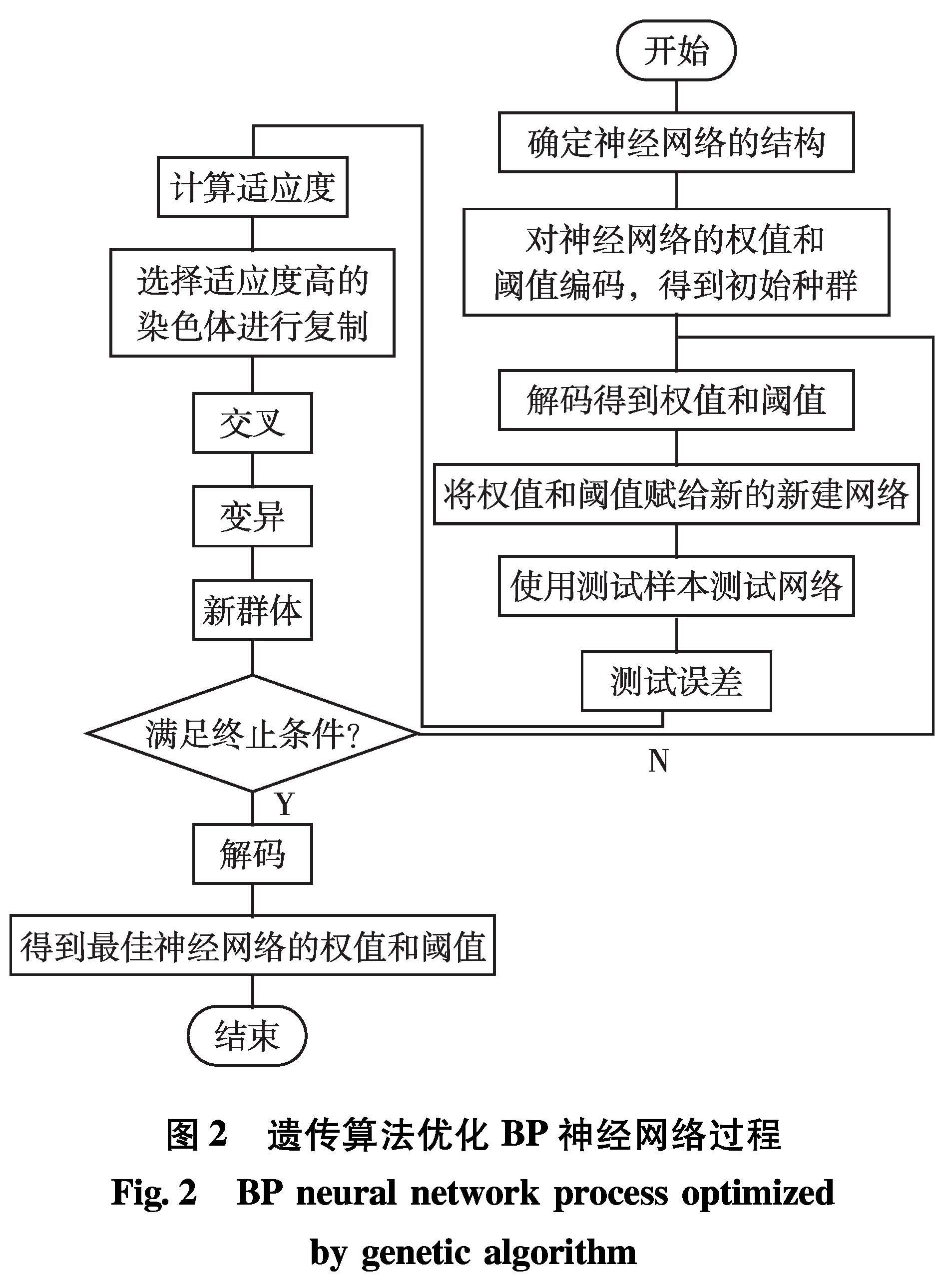
本研究建立了产能预测的BP神经网络模型,并使用遗传算法进行优化,模型的工作流程如图2.使用遗传算法优化神经网络模型可以获取更加准确的初始权值和阈值,神经网络模型进行优化后,可以更好地反应出输入数据与输出数据之间的关系,达到精确预测的目的.
图2 遗传算法优化BP神经网络过程
Fig.2 BP neural network process optimized by genetic algorithm
2.3 产能预测模型的训练及验证
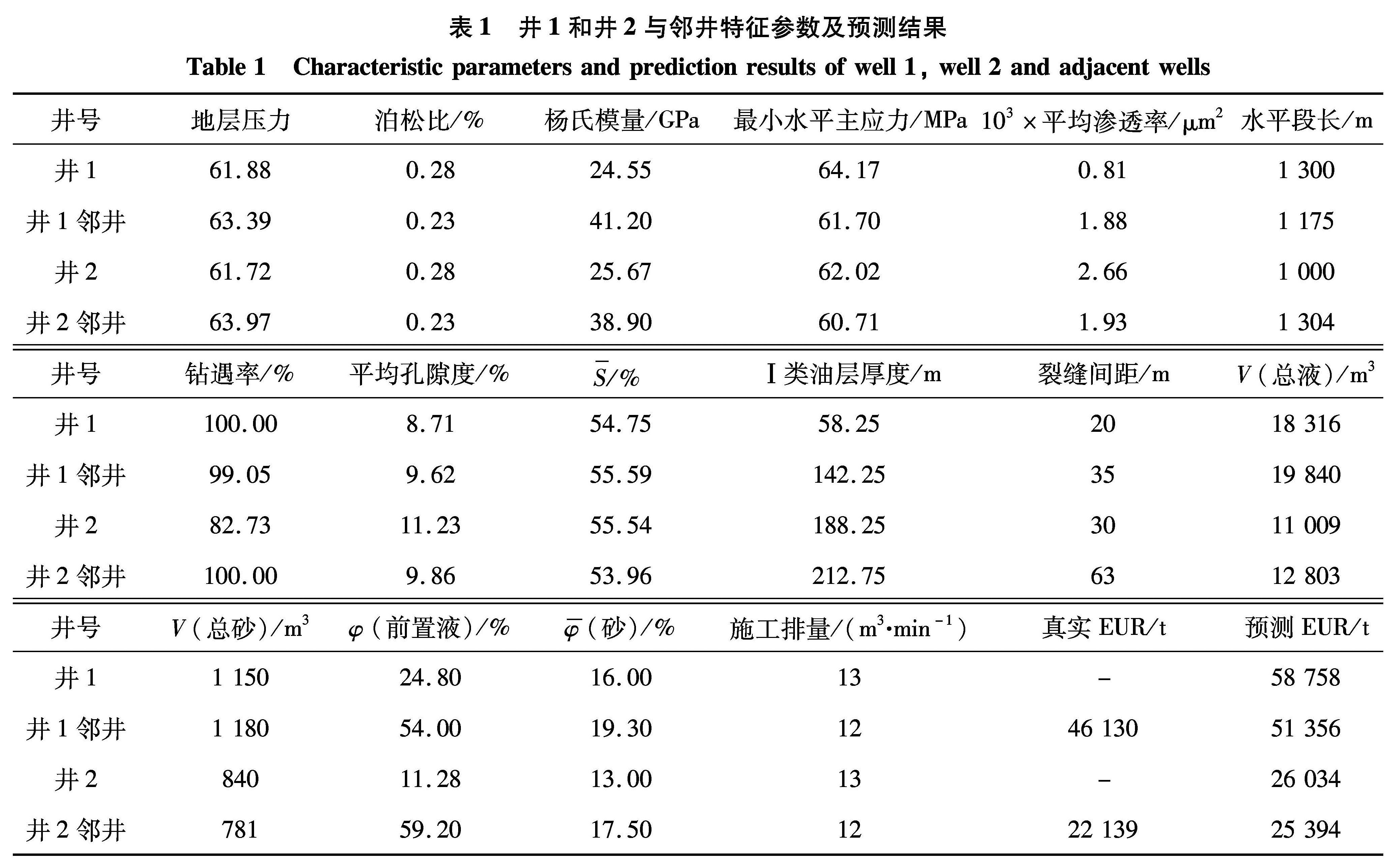
本研究以16个储层及施工参数作为输入特征值(表1),以EUR作为输出参数,建立特征参数与产能之间的3层BP神经网路模型,设隐含层的神经元为20个,网格训练的学习率为 0.001,期望误差为 0.05.通过反误差函数不断调节网格权值与阀值,直到网格输出误差逐步达到期望误差,完成网格训练.本次模型使用遗传算法的个体编码长度应包括中间层到输入层的16×20个连接权值,输出层到中间层的1×20个连接权值以及20+1个阈值,遗传算法的个体编码长度最终为16×20+1×20+20+1=361.
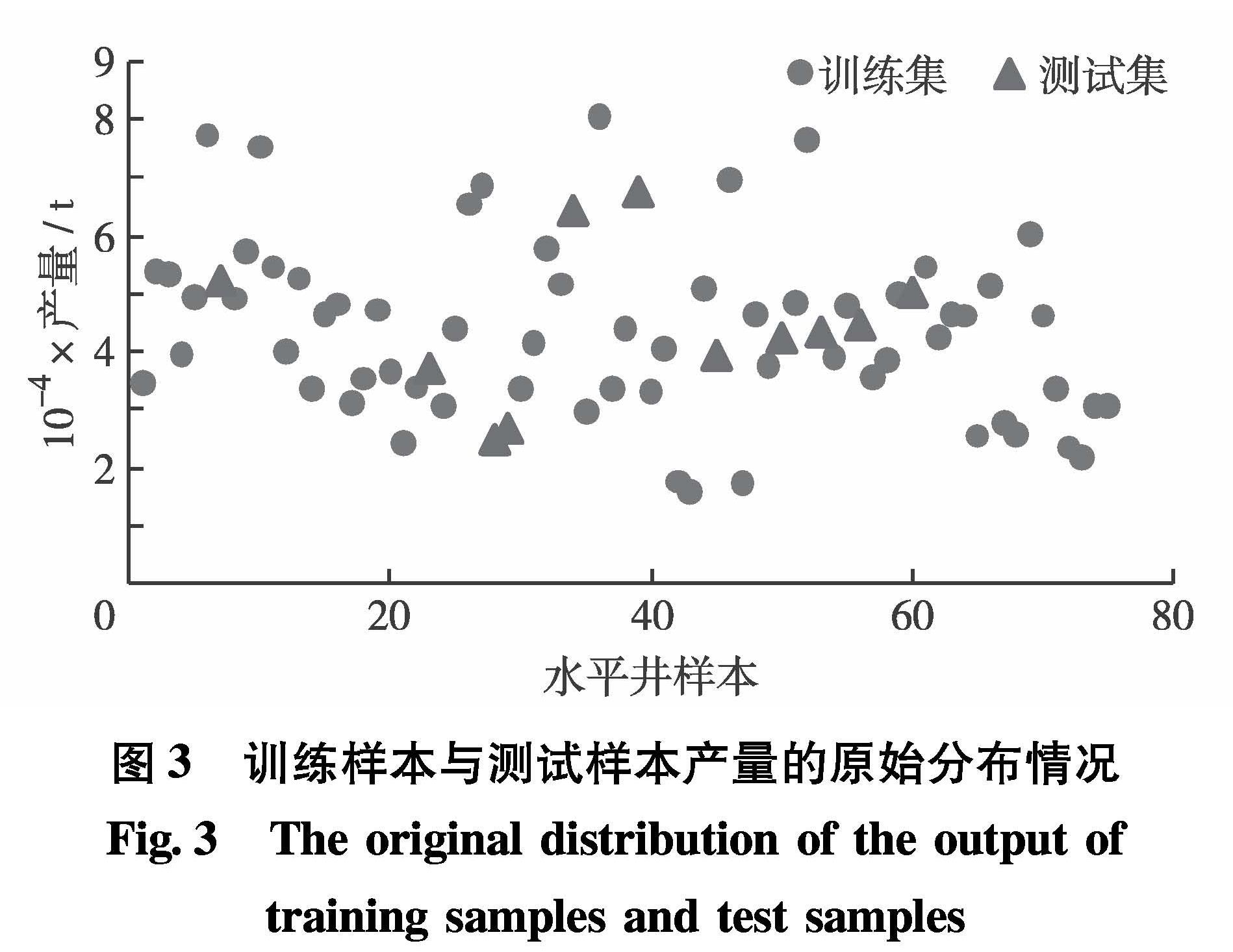
共收集压裂水平井75口,按照数量比为85:15划分训练集和测试集,分割后训练集为64口,测试集为11口,数据集的原始产量分布如图3.
图3 训练样本与测试样本产量的原始分布情况
Fig.3 The original distribution of the output of training samples and test samples
使用训练集数据训练模型,并基于模型在测试集上的评分评估模型性能.采用决定系数R2评估模型的性能.决定系数R2得分反映因变量的全部变异能通过回归关系被自变量解释的比例,如式(3), R2越接近1,样本中预测值和真实值越相近,表示回归分析中自变量对因变量的解释越好.
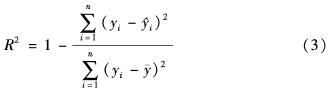
其中, yi为参数的因变量值; 为样本数据对应的预测值;
 为样本数据平均值.
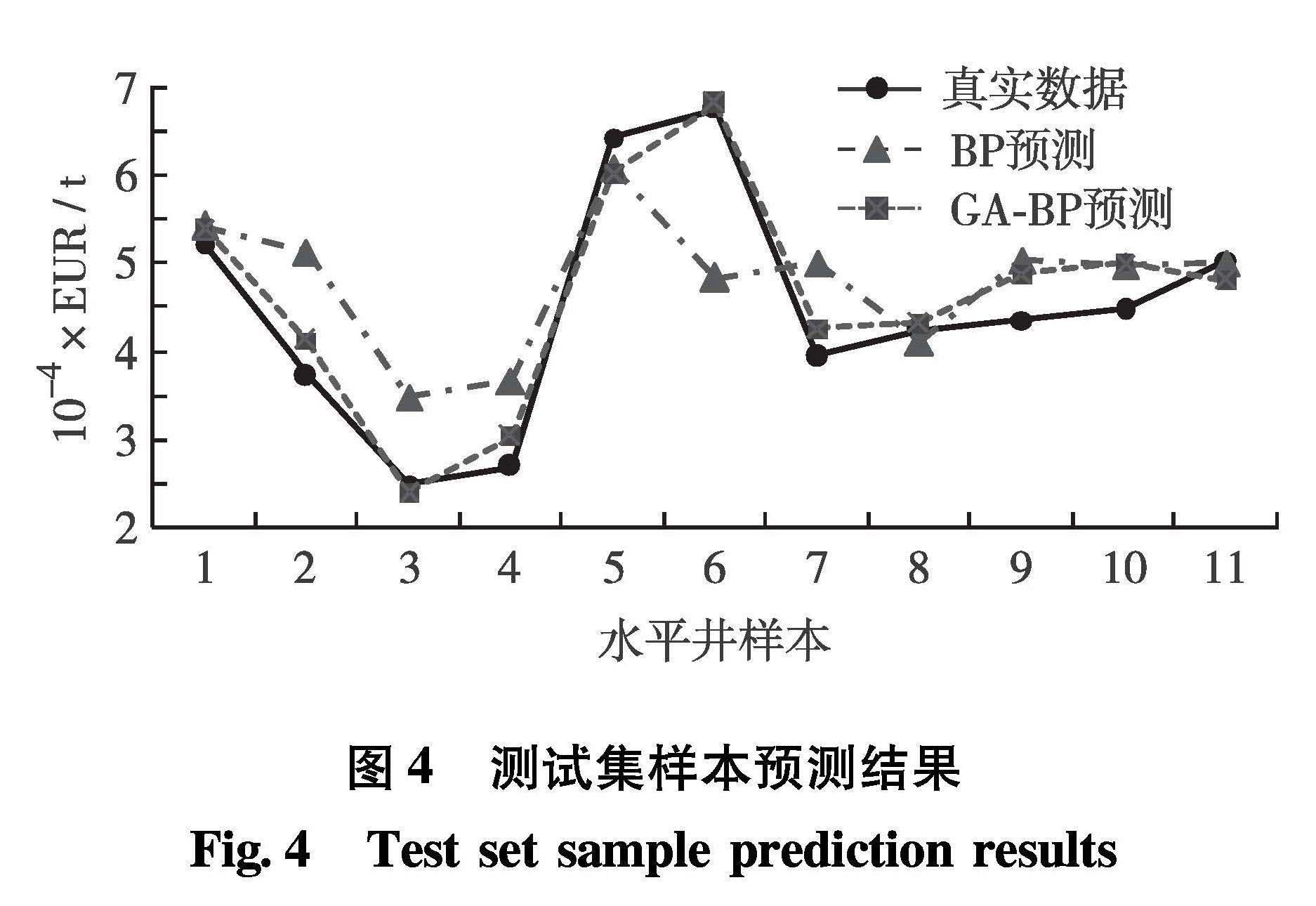
模型训练后,为验证优化后的模型性能,将其预测测试集样本的结果与原始数据及未经优化后的BP模型预测结果进行对比,结果如图4.由图4可见,使用遗传算法优化后的神经网络模型(GA-BP)效果更好,该模型测试集的决定系数得分R2=0.76, 未经优化的决定系数得分R2=0.62, 证明该模型该模型性能优良,泛化能力好,具备一定的适用性.
图4 测试集样本预测结果
Fig.4 Test set sample prediction results